
About / Rasmus Lundager
Creating worlds
with people.
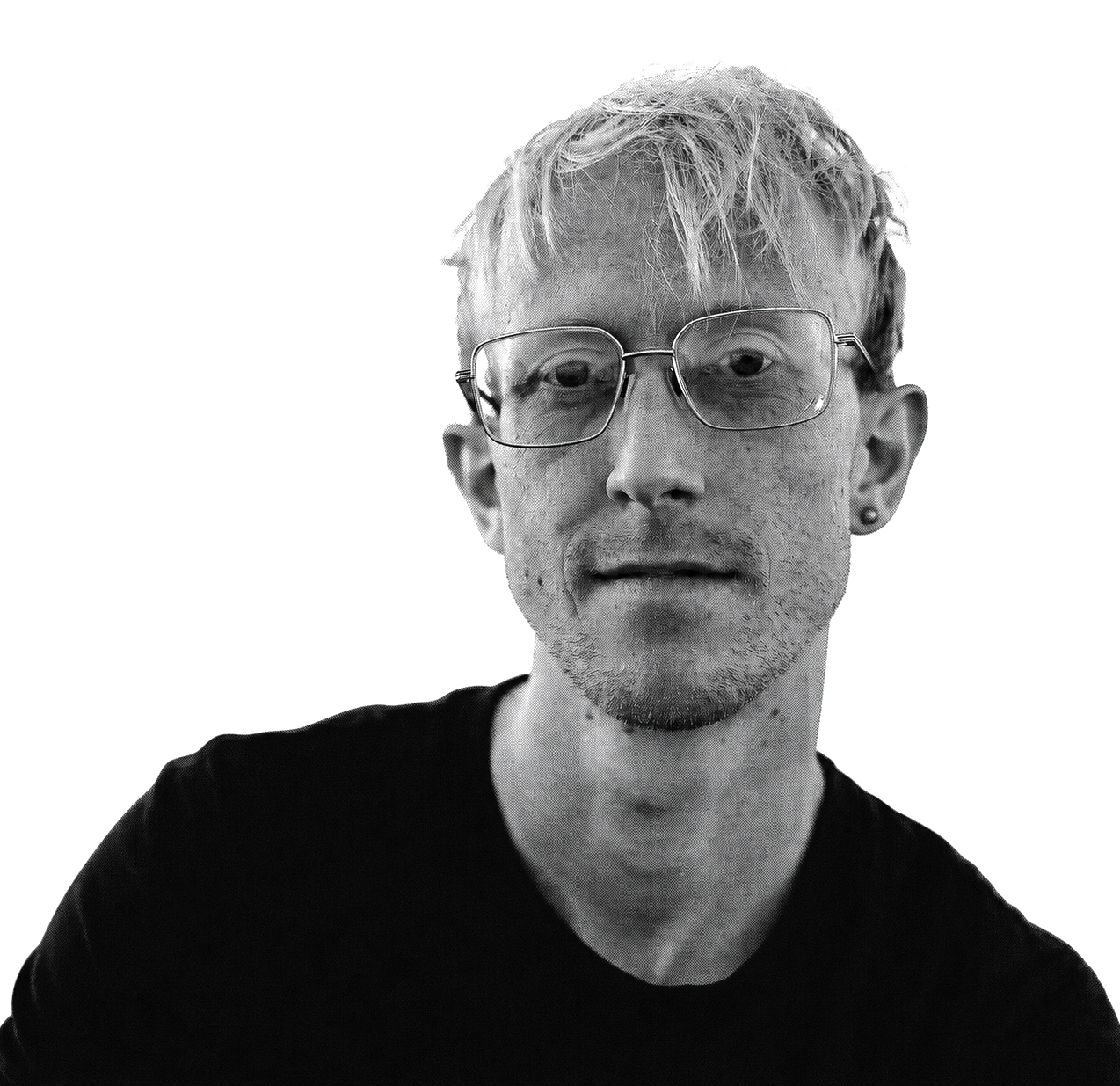
I’m Rasmus Lundager, a multidisciplinary creative producer working where sound, story, performance and space meet.
Bent Anker Jensen
My philosophy
I believe the best art happens when everyone making it has room to bring something of themselves into the work. Their life, their experiences, their heart. I want to actively encourage that. To me, it’s the richest source of material that can really move someone.
I think people can feel it on the other side. Something of the person who made it reaches the person experiencing it, and the work takes on another life through them. It becomes part of their memories, their feelings, their way of seeing something. That possibility means a lot to me.
The art that gets to me often leaves me with a feeling I can’t quite explain. A sound, an image, an atmosphere that follows me home. I’m drawn to work that lets me spend time with that feeling, without explaining everything away. That’s something I keep coming back to in my own work, too: how to give a feeling a form.
Emergence
One of my favourite things about making art is the moment something happens that I couldn’t have thought of on my own. Someone hears an idea differently. A sound changes the mood. We try something almost as a joke, and suddenly it makes sense. Occasionally, the joke turns out to be the best idea we’ve had all day.
There’s a word for that—emergence—and it’s stayed with me from my studies in process leadership. I recognise it in the moments when a collaboration starts to have a life of its own. I love having a direction, but I also want to be surprised by what we find along the way.
My methods
I usually start with a conversation. I want to know what people are excited about, what they’re curious about, and what they hear or see in an idea that I might have missed.
I care about whether everyone involved feels the confidence, engagement, and freedom to contribute personally. Whether they feel they can bring their own ideas and draw on what they’ve lived, loved, or noticed. That confidence takes time to build. I try to make room for it by listening closely, taking unfinished ideas seriously, and giving people a real influence on what we’re making.
My job is to bring those contributions into a whole, with a clear direction and a consistent story. I enjoy finding the connections: hearing how one person’s idea opens up another’s, and recognising the thread that can hold it all together. I want people to feel their contribution belongs in the finished work.
My studies in process leadership taught me how much the conditions around the work matter. A shared intention, clear expectations, and something concrete to try can help people give the work their full attention.
I like getting ideas out into the world while they’re still a little rough. Play it, make a version, put things next to each other and see what happens. It gives us something to respond to together. Often, that’s when we discover what the idea actually needs.
When I’m facilitating, I pay attention to the room as much as the work. Who hasn’t spoken yet? Where is there excitement? Are we stuck because something needs more time, or because we’re holding on to an idea that has run its course? I don’t always get that balance right, but I care about it.
Sometimes my job is to make a decision and help us move forward. Sometimes it’s to step back and let someone else take us somewhere I wouldn’t have gone. I really enjoy that part of collaboration: being changed a little by the people I’m making something with.
Flow
I’m always working to keep the flow going. I think every process has a sweet spot: a steady pace that keeps us moving forward, with enough room to think, feel, and explore. Ideally, everyone is absorbed in the work, and nobody needs to spend 10+ minutes going to the bathroom.
Once we’re moving, I like us to put on our “yes, let’s try it” hats. Give an idea a chance before debating it to death. In my experience, we get further and make better work when curiosity and excitement have somewhere to go.
As a leader, I’ve found that giving people room to play often gets us there faster. Through trying things, they discover for themselves what works and what doesn’t. That understanding builds confidence and keeps their own instincts alive in the work.
Too much direction can interrupt that. People start second-guessing themselves, trying to work out what I want instead of exploring what they can bring. The pace slows, spontaneity fades, and we risk losing the personal spark that gave the work meaning in the first place.
My job is to keep our direction clear and our momentum steady, while giving people enough freedom to find their way into it.
Have a world in mind?
Let’s start a conversation ↗